

The lyrics to an old Rolling Stones song claim, You can’t always get what you want. But if you try sometimes, you might find you get what you need.
If only that were true when it comes to homicide survivors getting what we need in a homicide investigation. Some of us do. (I hit the jackpot.) But others don’t. Even if they try.
So, what do we want? Most family members agree on a minimum baseline of the following three qualities they’d like in an investigation into the murder of their loved one.

1. More than anything, most co-victims of homicide want the assigned detective to have well-honed investigation skills. Seems straightforward. But there are many ways an investigation can go south. Errors are more common if the first official to arrive is inexperienced, if the department handles so few homicides that they aren’t up to the task and don’t possess the necessary technology, or if they wait too long to ask for help.
The following five examples are taken from actual events reported in the media or by my podcast guests from Domino Effect of Murder which illustrate how some investigations are delayed or doomed from the start.

a) sloppy preservation of the crime scene — The recent report by Connecticut State Police on the 2012 school shooting at Sandy Hook Elementary indicated that personnel and local dignitaries were seen walking inside the school and over the parking lot without regard for the yellow crime scene tape before and during the time evidence was being collected. Some people’s trampling was not stopped nor were they identified. The panel reviewing the Sandy Hook investigation admitted that “relevant evidence was stepped on, including bullet casing and, glass shards which had yet to be processed and properly documented.”
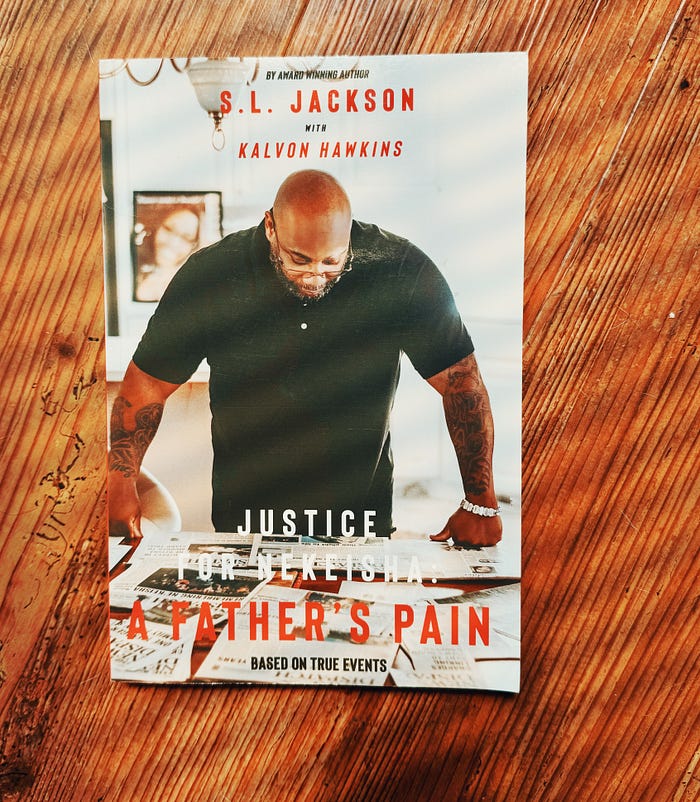
b) strained relationships with the community — In Michigan City, Indiana parents emphatically told their teens to withhold information from the police in the shooting death of NeKeisha Hodges-Hawkins due to distrust of law enforcement. NeKeisha was caught in the crossfire between two warring groups while in a park on Halloween of 2017. She was just in the wrong place at the wrong time. Despite 150 witnesses, no one came forward. This prolonged and complicated the case against her killer who (as it turns out) was identified and protected by police within the first hour of the killing. (See the book Justice for NeKeisha: A Father’s Pain by S.L. Jackson and Kalvon Hawkins (2022) for the full, twisted story.)

c) evidence mishandled — On May 28, 2019, there was a stabbing death of a man named Austin in The Woodlands, Texas area in the leasing office of his apartment complex. The rooky officer placed the suspect’s cell phone on top of his squad car, forgot about it, and then drove over it as he left the crime scene. Needless to say, it was destroyed. These and other errors contributed to the murder never being resolved. His fiancé Jessika commented, “Years later I’m still angry at how it was handled.” (For the full story listen to Jessika’s episode on the podcast episode dated July 12, 2023.)

d) overlooked or hidden evidence — Michael Morton was wrongly convicted in the stabbing death of his wife in 1986 in Williamson County, Texas. Police overlooked evidence in the field next to the murder scene of a green bandana. At the urging of Michael’s brother-in-law, the bandana was collected. It stayed in the evidence locker for years but was finally tested for DNA as the science improved. In addition, law enforcement never followed up on a call from a neighboring county that a man in an old green van had attempted to fraudulently use the deceased woman’s credit card the same day she died. Moreover, the prosecutor hid eye-witness evidence from Michael Morton’s toddler of “a monster-man hiding behind the shower curtain after Mommy was hurt.” The little boy’s description of the stranger in their home the morning of the murder was nothing like his father’s appearance. These bits of information ultimately led to the release of Michael Morton, but not until the killer killed again, not until Michael had served 25 years and lost custody of his son through adoption to a relative. (See the book Getting Life: An Innocent Man’s 25-year Journey from Prison to Peace by Michael Morton, 2015, for the full account of what went terribly wrong.)

e) Letting ego interfere with cooperation with colleagues. A notable homicide case was delayed for weeks by a lack of cooperation between investigating agencies in the “Beltway Snipers Murders”. Back in 2002 John Muhammad and Lee Malvo terrorized the Washington D.C. metropolitan area and crossed jurisdictional boundaries between Washington D.C., Maryland, and Virginia. Law enforcement refused to share information, and coordinate their efforts, and they did not agree on strategy. It took the formation of a Joint Task Force to finally solve the high-profile serial homicide case.

2. Keep updates a priority. This second priority is pretty straightforward, too. My adopted children’s biological mother, Lori Ann Johnson, was murdered in Tacoma Washington in the spring of 1994. Her family received no updates on the status of the case — ever. Not then and not in the last 30 years. Immediately after labeling the case “in cold case status” the Tacoma, Washington Police Department gave Lori’s mother a phone number to “check in for information.” It simply rang and rang. She later learned it was a non-working number. Decades later I asked a seasoned homicide detective from Seattle to look into this. His specialty was cold cases. He did. He reported back, “It’s strange. There is almost no information on this homicide anywhere in the Tacoma Police Department.”

3. Professionalism and compassion. A third quality is balance between compassion and indifference. We don’t want an investigator to be highly upset about the homicide any more than patients in an emergency room want physicians to sob when they see their injuries. But neither do we want the murder treated like a parking ticket. Is balance too much to ask? It may not take much. Subtle things, like referring to the deceased by name, rather than “vic” or “victim” mean a lot. So does never interviewing next of kin near evidence of the homicide. A coroner from Tennessee told me he admonished a patrol officer for returning the bloody clothes and personal effects of the deceased to their family in a garbage bag rather than in carefully sealed and labeled evidence bags. Balance.

A lack of professionalism and compassion occurred with one of my podcast guests, Hope Regar. She received a knock on her door early one February morning in 1997. The officer from the Columbus Police Department handed her a note. He said, “It’s about your son. Call this number.” He claimed to know nothing more. When Hope called the phone number on the note, the voice on the other end answered, “Greene County Morgue.” This is how she learned about the murder of her 19-year-old son. (You can hear her full account on Domino Effect of Murder from March 16, 2022).

Sometimes, however, we do get what we want. Another guest on the podcast, Kevin McCall, was treated with professionalism and compassion by the arresting detective in the homicide of his son, Ryan, in Tampa Florida. Even after the suspect was convicted, the assigned detective contacted the family annually for several years. (You can hear his interview on the podcast from July 26, 2023).
But, other factors help us get what we want also. A partial list would be:
l) cooperative witnesses who give accurate information
2) crime labs that are adequately funded and staffed
3) an organized evidence room with a system for managing it and a 100-year disposal policy
4) adequately staffed police departments
5) outgoing, retired, or transferred personnel who leave typed, organized, and useful records behind for their replacements
6) a short time window between the time of death and the discovery of the body
7) a prosecutor willing to prosecute the case and not hide evidence
8) a perpetrator whose DNA is already in the fingerprint database
So How Can We Get What We Want?

Stay in Touch
The squeaky wheel gets greased. If law enforcement sees the family actively searching, they’re more likely to do the same. Families need to make detectives aware of new developments and supply all the information requested, like social media accounts, passwords, names of known associates, and biological samples.
Reach Out
There have been more improvements in forensic technology over the last three years than over the previous 30. It’s a lot to keep up with, especially when a department seldom works cases where this technology would help. Expense is also a consideration. A department can’t justify pricey equipment (like an M-Vac) or employ an expert they might only use once every four years.

Second Opinion Services Unsolved/Cold Cases (or S.O.S.) through POMC (Parents of Murdered Children) is a volunteer-staffed board of medical, law enforcement, and investigative experts who give a second opinion based on existing evidence and/or the records submitted to them. (They don’t investigate a case, serve as expert witnesses, or help find suspects.)
Ask About…
The American Investigation Society of Cold Cases aids law enforcement with cold cases for free. All a department needs to do is ask, but some are unaware of this valuable resource. The request must come through investigators, not the family.
Let’s get what we need….


